Data from Equilar (methodology), published by The New York Times:
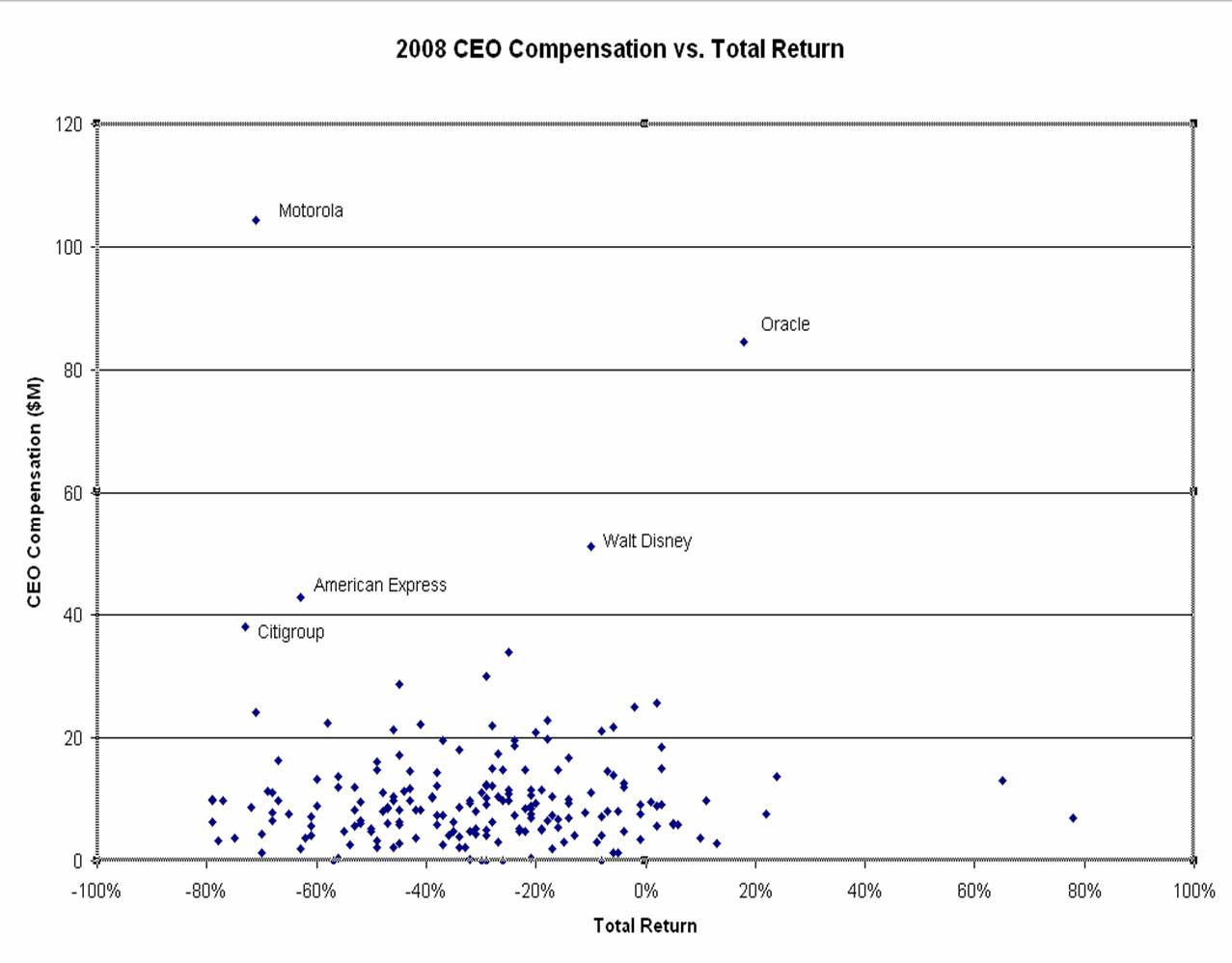
I know this is simplistic, but I just couldn’t resist.
Some caveats:
- Stock total return is a poor way to measure CEO performance – yet it’s the one that CEOs and boards commonly point to to justify compensation.
- A CEO may have been granted a large stock award in 2008 as a reward for “good performance” in 2007. This could explain the combination of high compensation and poor 2008 performance. However, just think about what that means for a second.
- Most of the large compensation awards are largely restricted stock or stock options. These were valued as of the data of the grant, so if the company’s stock price later fell, the CEO is unlikely to realize the calculated value of the award. But imagine if the stock price had gone up instead: the CEO and the board would be insisting that the award should be valued as of the grant date, not the later exercise date (when it would be worth much more).
Also, I excluded a company called Mosaic, because it’s total return was 257%, so it packed all the other companies into one side of the chart. Mosaic’s CEO earned $6 million.
Continue reading “Two Things That Have Nothing To Do with Each Other”
 The Baseline Scenario